all

Gerard K. O’Neill (Space Studies Institute) (1975)

Gerard K. O’Neill proposed space colonies as a solution to overpopulation, pollution, and resource depletion, envisioning self-sustaining habitats constructed using lunar materials and powered by solar energy. Isaac Asimov highlighted the challenges of cosmic radiation protection and obtaining hydrogen from the moon, emphasizing the need for careful planning and technological advancements.

Gerard K. O’Neill (Space Studies Institute) (1975) Read More »

Fei-Fei Li (Stanford) (Apr 2021)

AI integration in healthcare promises a transformative shift in patient care but faces challenges like data privacy, ethical concerns, and the need for empathetic approaches. AI can revolutionize healthcare by enhancing diagnosis, treatment, and democratizing access, but successful implementation requires balancing technological advancements with human-centered design.

Fei-Fei Li (Stanford) (Apr 2021) Read More »

Mark Zuckerberg (Meta) (Feb 2021)

Virtual reality (VR) and augmented reality (AR) technologies are transforming remote work, social interactions, and overall digital experiences, with potential for increased productivity, economic opportunities, and reduced environmental impact. VR, led by Facebook’s Oculus Quest 2 headset, has gained traction, while AR faces challenges in optics, display technology, and user interfaces.

Mark Zuckerberg (Meta) (Feb 2021) Read More »

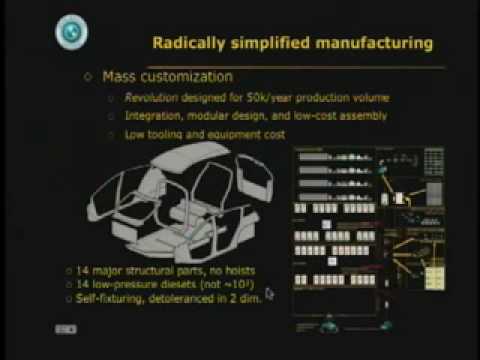
Amory Lovins (Rocky Mountain Institute) (Apr 2009)

Transportation expert Amory Lovins proposes a multifaceted strategy for revolutionizing vehicle design, fuel consumption, and energy efficiency to reduce oil dependency and combat environmental concerns. By leveraging advanced materials, integrative design, and innovative manufacturing processes, the automotive industry can enhance energy security and mitigate environmental impacts.

Amory Lovins (Rocky Mountain Institute) (Apr 2009) Read More »